
Using Mind Maps for Self Analysis...
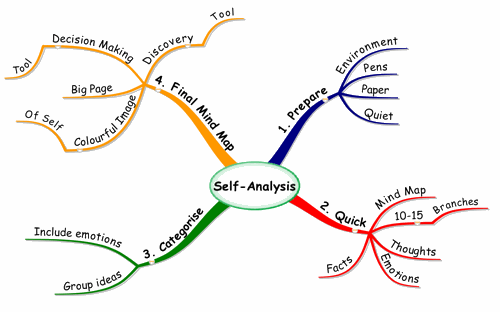
Mind Maps can help you to gain greater insight into yourself.
By understanding your needs, your desires and your long term aims, you will be able to live a fuller and more satisfying life.
You can use Mind Maps to decide whether you should change your job, buy a new house, study further, or simply to help you clarify your thoughts and feelings.
A Mind Map is the ultimate tool in unlocking the full potential of your brain and by utilizing this potential in self analysis, you will be able to reach your full potential.
I assume you have a basic understanding of how to Mind Map. If you don't first look at some of our introductory lessons on how to Mind Map.
Subscribe to Using Mind Maps
Get Access to the Best Mind Mapping Tips, Tools, Techniques Resources and Opinions.
1. Start with a quick 5 minute Mind Map
To do this you have to first prepare your material and your environment. Once you have done this, you need to do the following as fast as possible.
- Take a set of coloured pens and draw a coloured picture of how you see yourself
- Draw 10-15 curved branches around your image
- Fill in facts, thoughts and emotions about yourself
- Put one word/idea on each branch
- Expand using sub branches
- Remember to work as fast as possible
2. Categorise your ideas
Now start a new Mind Map and categorise the points above.
Examples of categories are:
- Strengths
- Weaknesses
- Likes
- Dislikes
- Goals
- History
- Achievements
- Hobbies
- Emotions
- Responsibilities
- Friends
- Etc.
3. Produce a colourful Mind Map image of yourself
This step is very important.
- Use a big sheet of paper, preferably A3 or larger.
- Once again, draw a central image of yourself. If you feel you can't draw well enough, cut out a photo of yourself and paste it in the middle.
- Use colourful branches for each of your categories and add images to the branches
- Add as many sub branches for each of the categories
Don't overlook this step in your life. You may be surprised at what you learn about yourself!
Return to Using Mind Maps Home Page
Subscribe to Using Mind Maps
Get Access to the Best Mind Mapping Tips, Tools, Techniques Resources and Opinions.


