Mind Map principles will provide clarity
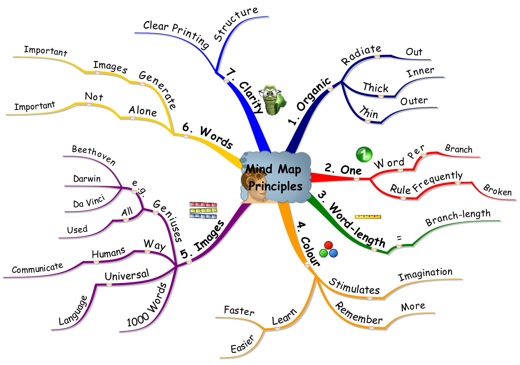
Mind Map principles, as defined by Tony Buzan, the inventor of the Mind Map, you will obtain the maximum benefit when Using Mind Maps in your daily life.
Subscribe to Using Mind Maps
Get Access to the Best Mind Mapping Tips, Tools, Techniques Resources and Opinions.
Organic
- A Mind Map®, in its ideal form, should be organic.
- It should use free flowing branches that are curves.
- The inner branches should be thicker closer to the centre and become thinner as they radiate outwards.
- The outer branches should be thinner that the inner ones.
One Word Per Line
Each branch should contain only one word. Tony Buzan is very strict when it comes to this rule. He believes that one word per branch generates the most creativity by making the Mind Map 'open', as each Key Word can generate an almost infinite number of associations and ideas.
Our experience has shown that this is the rule that is broken most often and will be your biggest challenge when learning to Mind Map®. We have our own set of rules governing this rule, which you will discover as you use our material.
Most of the Mind Map Software on the market makes it difficult to keep to this rule and may even encourage you to break it.
We don't want to be dogmatic, so decide for yourself once you have some experience in using Mind Maps.
Word Length
Word Length should equal Branch Length. This ensures that the link between the two is maintained and therefore more likely to be remembered.
Colour
Colour stimulates the imagination and enables you to remember more. You also learn easier and faster if colour is used and, more importantly, it makes the process FUN!
Images
As the saying goes, 'A picture is worth a thousand words.' Pictures are also a universal language and the way humans communicate. All the geniuses of the world used images in their notes. Have a look at the notes of Da Vinci, Darwin and even Beethoven.
Words not important
Words alone are not important. It is actually the images that the words create that are important. Choose words that create the clearest image of what you are trying to remember.
Clarity
By printing clearly and structuring your Mind Maps properly, you will have both clarity of thinking and structured thought.
Like any discipline in life, sticking to the Mind Map Principles when you do your Mind Maps will give you the best possible results. If you do intend to break them, first wait until you have enough experience in Using Mind Maps. Experience teaches you when to obey the rules and when to break the rules.
Return from Mind Map Principles to Using Mind Maps homepageSubscribe to Using Mind Maps
Get Access to the Best Mind Mapping Tips, Tools, Techniques Resources and Opinions.


